My Account


Are You Stuck in an Inefficient Surface Preparation Process?
Just because it’s the way you’ve always done it doesn’t mean it’s the most efficient way.For decades, abrasive blasting has been the default method for industrial surface preparation. It’s familiar, proven, and capable of removing coatings while preparing the steel profile in a single process.
But when coatings are particularly difficult to remove, that familiar approach may not be the most efficient.
What if the most efficient way to complete your project isn’t the method you’ve always used?
Download our free Special Report: The Pros & Cons of Ultra High Pressure vs. Abrasive Blasting — and discover why questioning the default could change how you approach your next surface preparation project.

The Efficiency Fallacy: Is One Process Always Better Than Two?
Abrasive blasting has a significant advantage: it removes existing coatings while creating the surface profile required for recoating. One process. Two outcomes. That sounds like the definition of efficiency.But what happens when removing the coating becomes the most expensive and time-consuming part of the job?
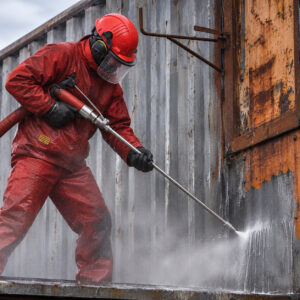
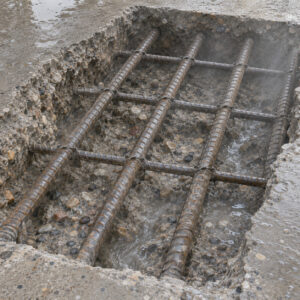
For thick, abrasion-resistant or pliable coatings, UHP waterjetting may offer a more efficient removal method. And when a new surface profile is required, a subsequent abrasive whip blast can complete that step using significantly less abrasive.
The efficiency of a project isn’t determined by how many methods you use. It’s determined by how efficiently you achieve the required results.
Our Special Report challenges the assumption that one process is always more efficient than two—and explores when a different approach could improve productivity, reduce costs and shorten project timelines.
What You’ll Discover in This Special Report
Choosing the right surface preparation method isn’t simply a matter of comparing equipment. It’s about understanding which approach delivers the required results most efficiently across the entire project.
Inside the report, you’ll discover:
WHEN WATER CHANGES THE EQUATION
Why thick, abrasion-resistant and pliable coatings can change the economics of coating removal—and when UHP deserves a closer look.
Why thick, abrasion-resistant and pliable coatings can change the economics of coating removal—and when UHP deserves a closer look.
SEPARATING COATING REMOVAL FROM SURFACE PROFILING
Why using UHP for coating removal and abrasive blasting for profiling can sometimes be more efficient than relying on one method for both outcomes.
Why using UHP for coating removal and abrasive blasting for profiling can sometimes be more efficient than relying on one method for both outcomes.
WHERE EACH METHOD HAS THE ADVANTAGE
The conditions that favour abrasive blasting, UHP waterjetting or a combination of both—and why neither method is universally superior.
The conditions that favour abrasive blasting, UHP waterjetting or a combination of both—and why neither method is universally superior.
REAL PROJECTS. MEASURABLE RESULTS.
Industrial applications demonstrating UHP at production scale, including the productivity differences between manual and robotic waterjetting.
Industrial applications demonstrating UHP at production scale, including the productivity differences between manual and robotic waterjetting.
COMPARING THE TOTAL PROJECT COST
Why labour, consumables, waste management, equipment configuration and downtime matter more than simply comparing equipment prices.
Why labour, consumables, waste management, equipment configuration and downtime matter more than simply comparing equipment prices.
THE RIGHT METHOD IS ONLY HALF THE EQUATION
How equipment selection, pressure, flow, tooling and delivery methods influence the productivity of a UHP operation.
How equipment selection, pressure, flow, tooling and delivery methods influence the productivity of a UHP operation.
The Proof Is in the Performance
The efficiency of any surface preparation method is ultimately measured by its performance on the job—not by assumptions about how it should perform.Our Special Report examines real-world projects that demonstrate how UHP waterjetting can deliver measurable productivity on large industrial surfaces.
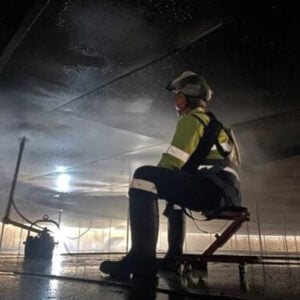
ROTTERDAM STORAGE TANK — UHP AT PRODUCTION SCALE
A robotic UHP system removed a three-layer epoxy coating from a large crude-oil storage tank, achieving average production rates of 300–400 m² (3,200–4,300 ft²) per 8-hour shift. The project was completed within its scheduled four-week timeframe.
U.S. NAVY HULL — MANUAL VS. ROBOTIC UHP
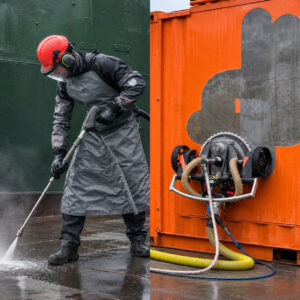
On a marine coating-removal project, robotic UHP achieved a reported production rate of 26.0 m²/hour (280 ft²/hr), compared with 9.3 m²/hour (100 ft²/hr) using a manual lance.
That’s 2.8× the reported production rate—using the same fundamental removal method but a different delivery system.
Question the Default. Find the Most Efficient Approach.
The most efficient surface preparation method isn’t necessarily the one you’ve always used. It’s the one that delivers the required results at the lowest total project cost.
With decades of experience in both UHP waterjetting and abrasive blasting, BlastOne understands the advantages and limitations of each process. We can help you evaluate your options, trial equipment against your actual coating and substrate, and determine whether UHP, abrasive blasting or a combination of both makes the most sense.
Before you estimate your next coating-removal project, question the default.
Download The Pros & Cons of Ultra High Pressure vs. Abrasive Blasting and discover why the familiar approach isn’t always the most efficient.
You May Be Interested

Contact BlastOne
We love to talk to customers and help them make the best decisions when purchasing Air preparation and drying equipment.
You can reach us via our Live Chat, Email, Phone, and Online Form.