My Account


Ultra-high-pressure waterjetting can remove coatings, corrosion, scale and concrete because the water stream carries substantial energy.
A safe system of work must be based on hazard hierarchy control of the risks, elimination, substitution, engineering controls, administrative controls and PPE.
The Ultra High Pressure Water jetting or Waterblasting release a high amount of energy and need to be performed by trained personnel to avoid severe injury.
Important notice
This page provides general information only. It does not replace manufacturer instructions, formal operator training, a site-specific risk assessment, a safe work method statement, applicable Australian or other state or applicable legislation, regulator guidance or professional safety advice.
Understanding UHP Waterjetting Hazards
Why UHP Waterjetting Is Hazardous
Ultra-high-pressure waterjetting can remove coatings, corrosion, scale and concrete because the water stream carries substantial energy. The hazards can include:
- Direct contact with the waterjet
- Injection injuries
- Hose or fitting failure
- Hose movement or whip
- Unexpected pressure release
- Flying debris
- Removed coatings and contaminants
- Noise
- Slips and falls
- Poor visibility
- Electrical equipment
- Working at height
- Confined spaces
- Robot movement
- Wastewater
- Hazardous substances
- Fatigue and manual handling
- Vibration
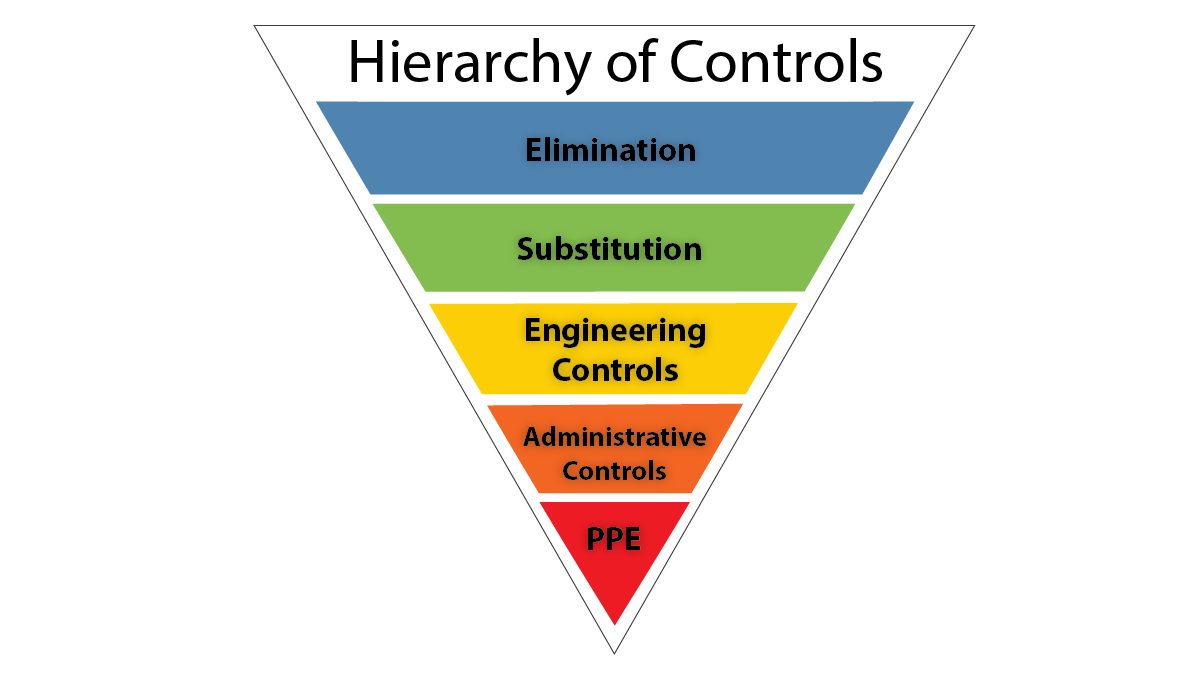
Begin With the Hierarchy of Controls
PPE should not be the first or only control. A safe system of work must be based on assessing the risks and applying the hierarchy of controls. Consider controls in the following order:
1. Eliminate the hazard where possible →
2. Substitute the process or equipment →
3. Isolate people from the hazard →
4. Use engineering controls →
5. Apply administrative controls →
6. Use PPE
Controls to Consider
The site-specific risk assessment should consider controls such as:
- Use robotic equipment to increase operator stand-off where appropriate.
- Install physical barriers and restrict access.
- Use remote controls, pressure dump systems and secure hose arrangements.
- Integrate vacuum recovery where suitable.</li
- Reduce pressure where the task permits.
- Plan the work from the safest practical position.
Training and Competency
UHP waterjetting should only be performed by trained and authorised personnel. Training and competency should include at least:
- Equipment setup
- Operating controls
- Shutdown procedures
- Hose inspection
- Nozzle inspection
- Tool handling
- Communication
- Exclusion zones
- Emergency response
- PPE inspection and proper use
- Wastewater and contamination
- Site-specific hazards
PPE for UHP Waterjetting
Selecting PPE
Required PPE should be selected through a risk assessment considering the pressure, flow, tool, working position and exposure.
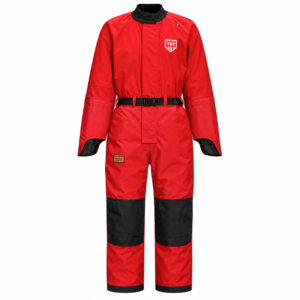
Waterjet Protective Clothing
Waterjet protective clothing is designed to help reduce injury from accidental contact with a high-pressure water stream. Depending on the task, this may include jackets, trousers, overalls, aprons, gaiters, hand protection, face, head and hearing protection, respiratory protection, and foot or lower-leg protection. Protective clothing has limits. It does not make it safe to direct a waterjet toward a person and must not replace safe operating distance, control systems and training. Selection considerations:
- Pressure rating
- Test method
- Coverage
- Fit and movement
- Damage
- Contamination
- Manufacturer-recommended criteria
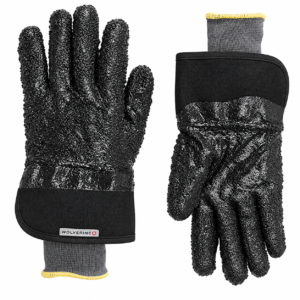
Gloves and Hand Protection
Gloves should provide suitable protection while allowing the operator to control the tool safely. Consider:
- Waterjet protection
- Grip
- Dexterity
- Cuff coverage
- Cut resistance
- Chemical exposure
- Wet conditions
- Compatibility with sleeves
- Vibration protection
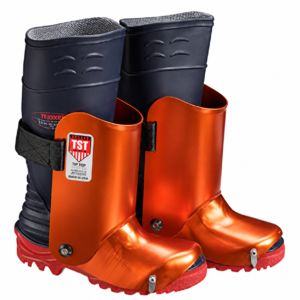
Boots and Foot Protection
Consider:
- Waterjet protection
- Lower-leg coverage
- Slip resistance
- Toe and sole protection
- Chemical resistance
- Ankle support
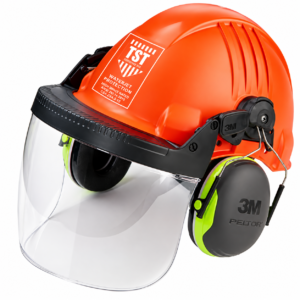
Face and Eye Protection
Operators and nearby workers may be exposed to water spray, debris, coating fragments, concrete particles and contaminated liquid. Protection may include safety glasses, goggles, a face shield and task-specific head protection.
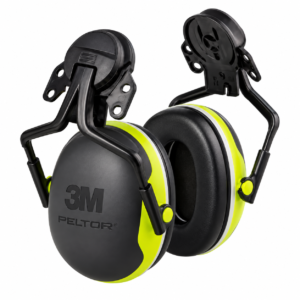
Hearing Protection
Pumps, nozzles and impact on the surface may produce high noise levels. A noise assessment should determine the required hearing protection, exposure duration, communication method and warning signals.
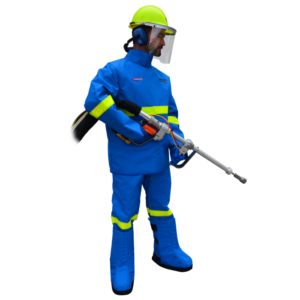
Respiratory Protection
Waterjetting may reduce some forms of airborne dust, but it can still aerosolise or disturb hazardous substances. Respiratory protection may be required for hazardous coatings, lead-containing material, biological contamination, silica-bearing debris, confined spaces, mist or chemical contamination.
Important: Asbestos-containing materials
Never Use High-Pressure Water on Asbestos-Containing Material
High-pressure water spray can damage asbestos-containing materials and spread contaminated debris and fibres. Before starting work on older buildings or structures, confirm whether asbestos or another hazardous material may be present and follow applicable legal requirements.
Equipment and Pressure Safety
Hose and Connection Safety
Hoses, fittings and connections must be correctly rated, compatible, inspected, protected, routed safely and removed from service when damaged. Inspect for:
- Cuts and abrasions
- Bulges
- Damaged covers
- Exposed reinforcement
- Corrosion
- Damaged threads
- Leaking connections
- Unauthorised repairs
- Incorrect fittings
Safe Hose Routing
Avoid routing hoses where they can be driven over, crushed, cut, caught, exposed to sharp edges, contacted by hot surfaces or damaged by chemicals.
- Physical barriers
- Signs
- Spotters
- Controlled access points
- Line-of-fire areas
- Hose routing
- Splash and debris range
- Work above or below other personnel
- Adjacent operations
Hose Restraints and Whip Protection
Use suitable restraints, guards or whip-protection systems. A failed high-pressure hose or connection can move unexpectedly and release water at dangerous pressure. Refer to applicable local standards, as hose-restraint requirements may differ by jurisdiction.
Dump Controls and Emergency Shutdown
The risk assessment should consider appropriate dump controls or pressure-relief systems so the operator can stop or dump pressure quickly. Depending on the system, these may include:
- Foot controls
- Trigger or deadman controls
- Remote shutdown
- Bypass valves
- Emergency stops
- Unloader valves
Testing and Overpressure Protection
Controls should be tested before work, located where they can be reached, protected from unintended activation, compatible with the pump and tool, and included in emergency drills. The pump should also have an appropriate automatic overpressure-relief system, such as a bursting disc where specified by the manufacturer.
Safe Operating Practices
Exclusion Zones
The site risk assessment should establish appropriate exclusion zones and consider:
- Physical barriers
- Signs
- Spotters
- Controlled access points
- Line-of-fire areas
- Hose routing
- Splash and debris range
- Work above or below other personnel
- Adjacent operations
Communication
The site risk assessment should establish a communication method that may include:
- Agreed hand or visual signals
- Radio communication
- Emergency signals
- Start and stop commands
- Line-of-sight requirements
- Clear responsibility for shutdown
Manual Tool Safety
Manual tools can create reaction force and fatigue. Consider tool weight, body position, trigger force, reaction force, working height, overhead work, vibration, footing, access platforms, duration, rest periods and whether task rotation or two-person operation is required.
Robotic Equipment Safety
During task planning and risk assessment, consider whether robotic operation can reduce operator exposure. Robot-specific risks and safeguards to assess include:
- Robot attachment
- Fall protection
- Unexpected movement
- Remote controls
- Hose loading
- Cable routing
- Loss of adhesion
- Work below the robot
- Recovery-system failure
- Repositioning
- Maintenance isolation
Operator Separation
The operator should remain outside the danger zone while the system is pressurised.
Environment, Wastewater and Contamination
Waterjetting can produce a mixture of water, coating debris, rust, concrete particles, chemicals, oils, salts and hazardous contaminants. Consider:
- Containment
- Collection
- Filtration
- Testing
- Storage
- Transport
- Disposal
- Noise
- Protection of drains and waterways
- Other environmental controls
Pre-Start Inspection and Emergency Response
Use these three groups as a pre-start review aid. The checklist does not replace manufacturer procedures or the site-specific risk assessment.
Equipment
☐ Pump inspected
☐ Hoses inspected
☐ Connections secure
☐ Nozzle and tool inspected
☐ Guards installed
☐ Controls tested
☐ Dump system tested
☐ Pressure relief system available
☐ Water supply confirmed
☐ Filtration installed
Work Area
☐ Exclusion zone established
☐ Access controlled
☐ Drains protected
☐ Recovery system ready
☐ Lighting suitable
☐ Footing stable
☐ Work-at-height controls installed
☐ Nearby operations coordinated
People
☐ Operators trained
☐ Roles assigned
☐ Communication tested
☐ PPE inspected
☐ Emergency response understood
☐ First aid arrangements confirmed
What to Do After a Suspected Waterjet Injury
High-pressure injection injuries can appear minor externally while causing serious internal damage. Treat any suspected penetration or injection injury as a medical emergency.
- Stop work, stop the equipment and cut off pressure.
- Isolate the risk.
- Arrange urgent medical assessment.
- Provide details of water pressure and possible contaminants to the medical team.
- Do not delay because the external wound appears small.
- Preserve information for incident investigation.
Frequently Asked Questions
Is standard wet-weather clothing suitable for UHP waterjetting?
In most of the case a standard wet weather clothing is not suitable. Task-specific waterjet protective clothing may be required based on the risk assessment, considering pressure, exposure and manufacturer rating.Does PPE make direct contact with a waterjet safe?
No. PPE is a last line of defence and has performance limits.Can robotic operation remove the need for PPE?
No. Robotic equipment may increase stand-off, but personnel still require suitable controls and PPE based on the site risk assessment.How often should hoses be replaced?
Follow manufacturer inspection and replacement criteria. Damaged, leaking or suspect hoses should be removed from service immediately.Who should select the PPE?
PPE should be selected by competent personnel based on the risk assessment, equipment, task and applicable requirements.
Explore UHP PPE and safety equipment
BlastOne Australia can help identify protective clothing, accessories and equipment appropriate to the proposed system. Final selection must remain part of the site-specific risk assessment and approved safe system of work.
Contact BlastOne
We love to talk to customers and help them make the best decisions when purchasing Air preparation and drying equipment.
You can reach us via our Live Chat, Email, Phone, and Online Form.