My Account


Explore this guide:
Understanding UHP Waterjetting
What is ultra-high-pressure waterjetting?
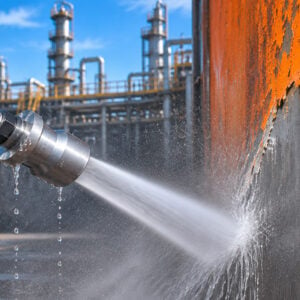
Ultra-high-pressure waterjetting, commonly shortened to UHP waterjetting, uses specialised pumps and tooling to deliver water at ultra-high pressures (by definition ≥ 2,000 bar / 29,000 psi) for demanding cleaning, coating removal and surface-preparation work. It is commonly used where conventional high-pressure waterjetting does not provide sufficient energy to remove tightly bonded coatings, corrosion, scale or contamination.
UHP waterjetting can remove coatings and contaminants without introducing abrasive media, making it particularly useful for industrial surface preparation where reducing spent abrasive waste is a priority. However, the resultant surface condition, production rate and effectiveness depend on the complete system configuration, not pressure alone.
Can UHP Waterjetting Remove Industrial Coatings?
Yes. Ultra-high-pressure (UHP) waterjetting is an effective method for removing many types of industrial protective coatings from steel and other suitable substrates. By directing highly pressurised water at the surface, UHP equipment can remove deteriorated paint, corrosion products and strongly adhered coatings without introducing abrasive media.
UHP waterjetting is used for coating removal on storage tanks, pipelines, marine vessels, structural steel and industrial equipment. It can be particularly valuable where airborne abrasive dust, spent abrasive disposal or restricted site access make conventional abrasive blasting less practical.
However, not all coatings respond equally to waterjetting. Removal performance depends on coating chemistry, thickness, adhesion, substrate condition, operating pressure, water flow and nozzle configuration. Some high-performance coating systems may require specialised tooling or additional treatment.
A representative trial area is often the most reliable way to establish achievable removal rates, confirm the resulting surface condition and determine whether UHP waterjetting is suitable for the specified coating system.
Surface Cleanliness, Flash Rust and Coating Readiness
Achieving the required surface condition involves more than removing visible coatings and corrosion. Following UHP waterjetting, the prepared substrate must be assessed for cleanliness, residual contamination, surface profile and suitability for the next coating system.
Surface Cleanliness: Waterjetting cleanliness grades, such as those described in SSPC-SP WJ/NACE WJ standards, provide a framework for assessing the visible condition of waterjet-cleaned steel. The required cleanliness grade should be established by the project specification.
Soluble Salt Contamination: UHP waterjetting can help remove soluble contaminants, but the process does not automatically guarantee acceptable salt levels. Where specified, surfaces should be tested against the project’s contamination limits.
Flash Rust: Freshly waterjet-cleaned steel may develop flash rust as it dries. The extent and acceptability of flash rust depend on environmental conditions and the coating specification. Flash rust should be assessed before coating application.
Existing Surface Profile: Waterjetting generally exposes rather than creates an anchor profile. The existing profile must be suitable for the coating system being applied.
Coating Readiness: Surface condition, moisture, ambient conditions and the coating manufacturer’s application requirements should all be verified before recoating.
A successful UHP surface preparation project is measured not simply by how much material has been removed, but by whether the resulting surface meets the specified requirements for protective coating application.
Common Industrial Applications for UHP Surface Preparation
UHP waterjetting is used across industrial maintenance, infrastructure refurbishment and protective coating projects where existing coatings or corrosion must be removed from suitable substrates.
Storage Tank Maintenance: Robotic and manual UHP systems can remove coatings and corrosion from tank walls and floors, allowing surfaces to be inspected and prepared for protective coating maintenance.
Marine and Shipyard Maintenance: UHP waterjetting can remove deteriorated marine coatings and corrosion from ship hulls, decks and other suitable steel structures while reducing the need for expendable abrasive media.
Pipeline and Penstock Rehabilitation: Waterjetting can remove ageing protective coatings from steel pipelines and penstocks before inspection, repair and recoating. Robotic equipment may be suitable for long or repetitive surfaces.
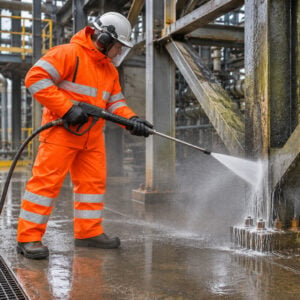
Industrial Plant Maintenance: Process vessels, structural supports and industrial equipment can require coating removal during planned maintenance or refurbishment. Waterjetting provides an alternative to abrasive blasting where site conditions favour water-based removal.
Structural Steel Refurbishment: UHP waterjetting can remove deteriorated coatings and corrosion from existing steelwork, provided the remaining surface profile meets the requirements of the replacement coating system.
Across these applications, the objective is consistent: remove unwanted material while achieving a surface condition suitable for the next stage of maintenance or protective coating work.
Where Waterjetting Is Used for Surface Preparation
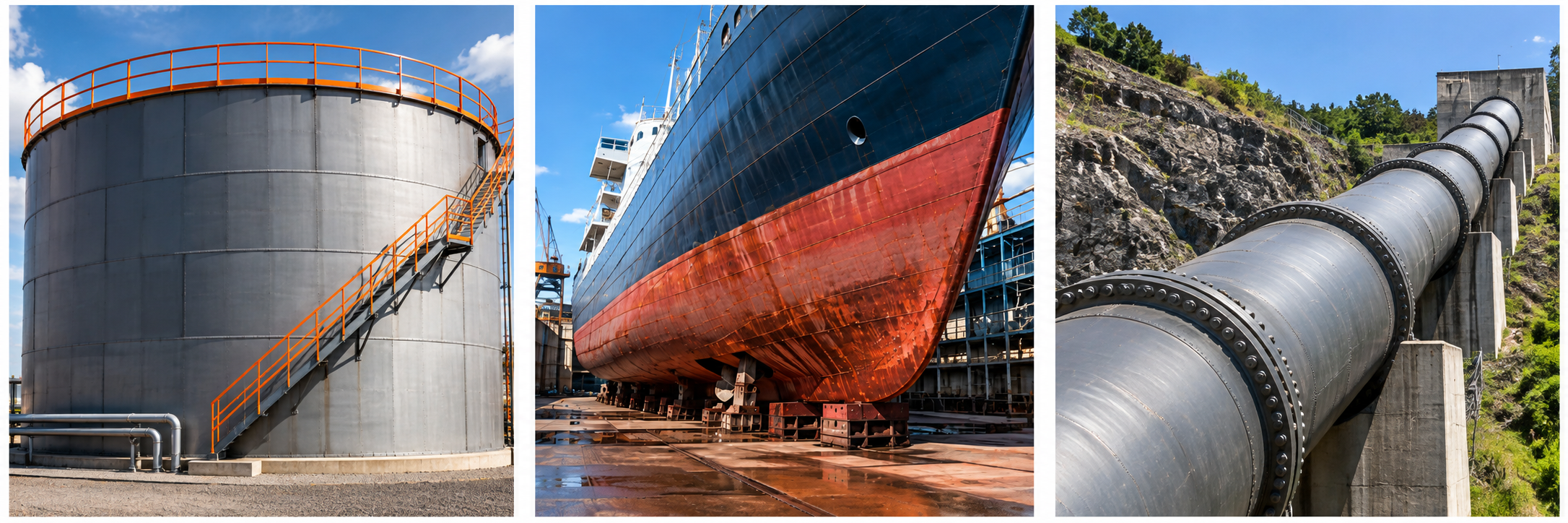
What Surfaces Can UHP Waterjetting Prepare?
UHP waterjetting is commonly used to remove coatings, corrosion and contaminants from industrial steel surfaces. It can also be used on other suitable substrates where the removal method and pressure are compatible with the material and the required finish.
Common applications include:
Steel Storage Tanks: Removing protective coatings and corrosion from internal and external tank surfaces before inspection, maintenance or recoating.
Pipelines and Penstocks: Removing deteriorated coatings and surface contamination from steel pipework and water conveyance structures.
Ship Hulls and Marine Structures: Removing marine coatings, corrosion and accumulated surface contaminants during maintenance and refurbishment.
Structural Steel: Preparing beams, columns, supports and other steel components for inspection and protective coating maintenance.
Industrial Vessels and Equipment: Removing coatings and corrosion from process vessels, machinery housings and other suitable industrial surfaces.
Concrete Surfaces: Removing certain coatings and contaminants from suitable concrete substrates where the objective is surface cleaning or coating removal rather than controlled concrete demolition.
The suitability of UHP waterjetting depends on the substrate, existing coating condition, required cleanliness, surface profile and subsequent coating specification. These factors should be assessed before selecting the preparation method.
Does UHP Waterjetting Create a Surface Profile?
Unlike abrasive blasting, UHP waterjetting generally does not create a new anchor profile on steel. Instead, it removes coatings, corrosion and contaminants to expose the existing surface profile beneath them.
This distinction is important because protective coating systems often require a specified surface roughness to achieve adequate adhesion. Where a suitable profile already exists, UHP waterjetting may allow it to be retained while removing the existing coating system.
However, if the underlying steel is smooth, the existing profile is insufficient, or the coating specification requires a new profile, additional surface preparation may be necessary.
Before recoating, contractors should verify that both the surface cleanliness and existing profile meet the requirements of the specified coating system. Coating removal alone does not guarantee that a surface is ready for recoating.
When Is UHP Waterjetting Preferable to Abrasive Blasting?
Both UHP waterjetting and abrasive blasting are established methods for industrial surface preparation, but they achieve different results and create different site requirements.
UHP waterjetting may be preferable when a project requires the removal of existing coatings and corrosion without generating large volumes of spent abrasive. It can also be useful where airborne abrasive dust must be minimised, an existing steel anchor profile is suitable for reuse, or robotic waterjetting equipment can improve access and production consistency.
However, waterjetting introduces wastewater collection, containment and disposal requirements. It also generally does not create a new anchor profile, which may make abrasive blasting more appropriate when a specific surface roughness must be established.
The best method depends on the existing coating, substrate condition, specified surface finish, site constraints, environmental controls and overall project economics.
For a more detailed comparison, see our guide to UHP Waterjetting vs. Abrasive Blasting.
Benefits and Limitations of Waterjetting
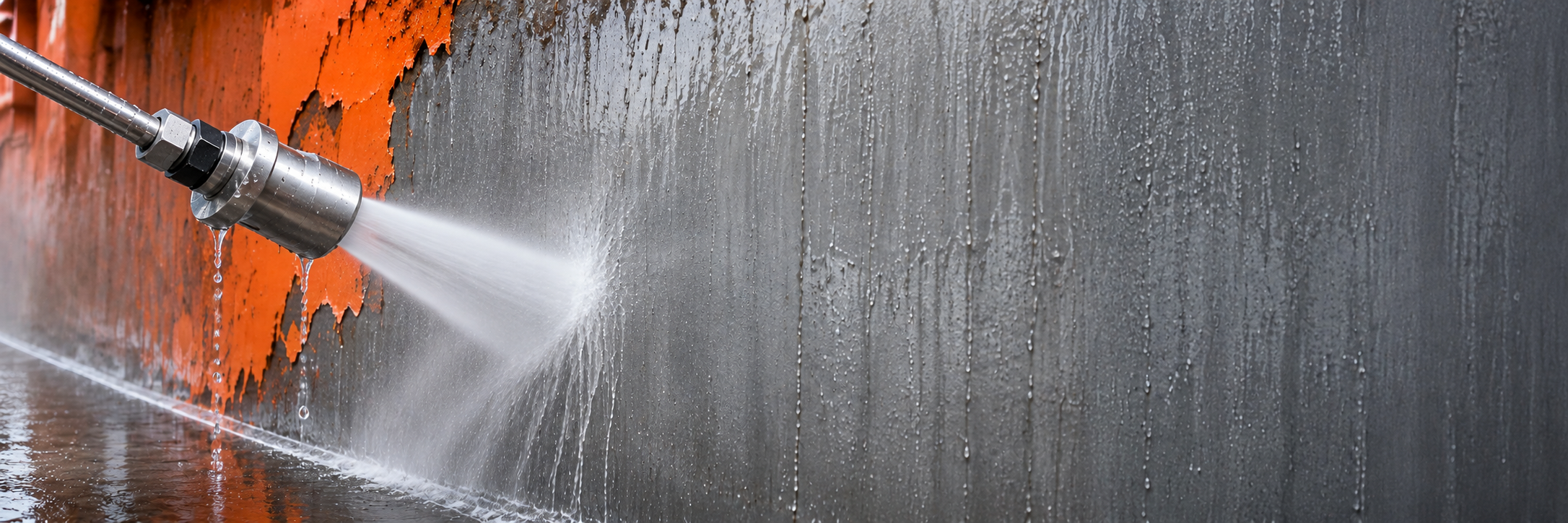
Key Benefits of UHP Waterjetting
UHP waterjetting is commonly used to remove industrial coatings, corrosion and surface contaminants, exposing the existing substrate and surface profile without typically creating a new anchor profile. Depending on the application, these technologies can improve removal efficiency, reduce certain environmental impacts and help protect the underlying structure.
Effective Surface Preparation
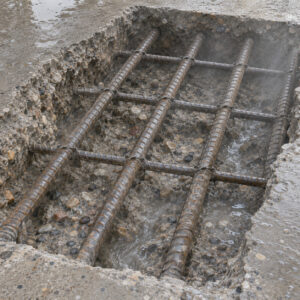
High-pressure water can remove coatings, corrosion, contamination and deteriorated concrete. In hydrodemolition applications, the process can selectively remove weakened concrete while producing a roughened surface suitable for subsequent repair and bonding.
Less Airborne Dust
Water-based removal methods can generate less airborne dust than dry abrasive blasting, grinding or mechanical demolition. However, appropriate controls are still required to manage water mist, airborne contaminants and removed materials.
Reduced Abrasive Waste
Waterjetting applications that do not use abrasive media eliminate the need to recover and dispose of spent blasting abrasive. This can reduce solid waste volumes, although wastewater, removed coatings and other contaminants must still be collected and managed appropriately.
Robotic Operation
Robotic waterjetting can improve consistency by controlling nozzle movement, travel speed and stand-off distance. Remote operation can also increase the separation between personnel and the active waterjet, reducing direct operator exposure when appropriate safety controls are in place.
Manual vs. Robotic Equipment
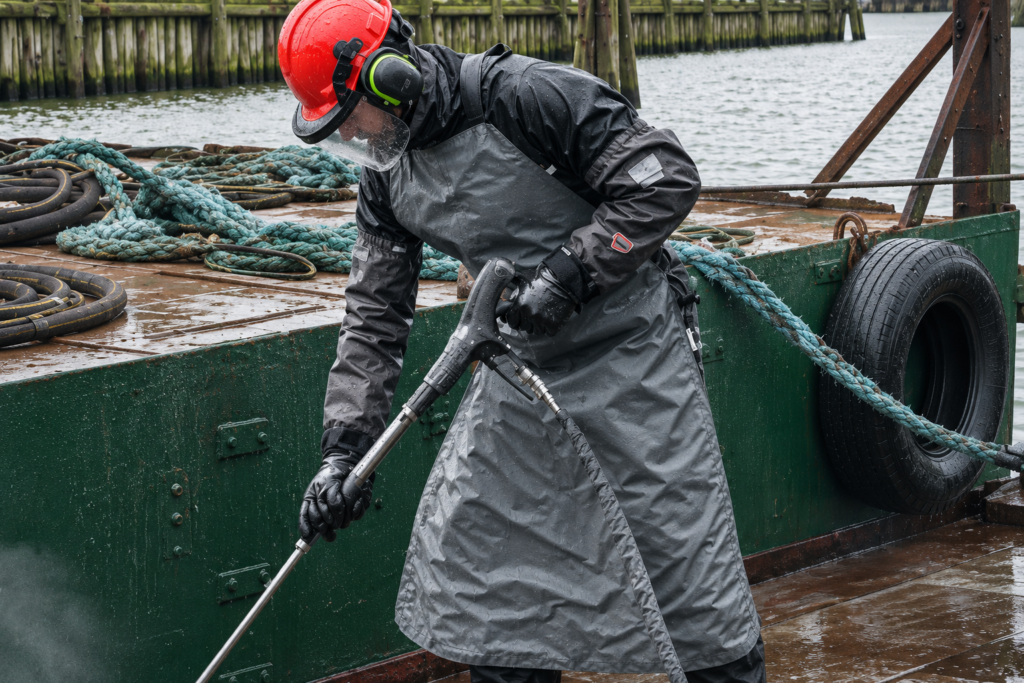
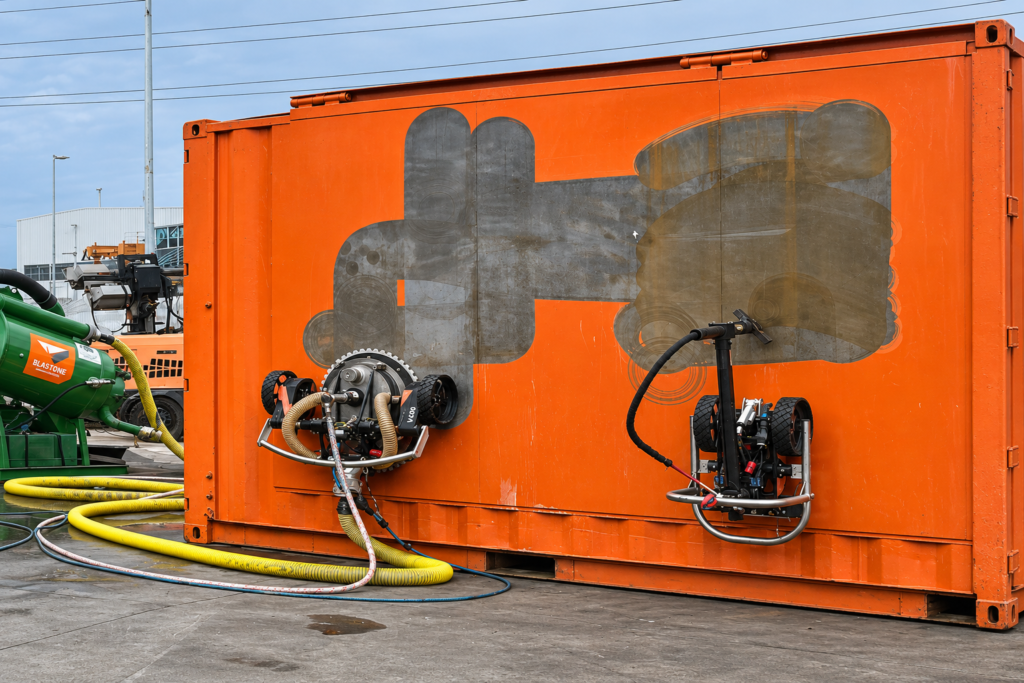
UHP waterjetting can be carried out using handheld tools or remotely operated robotic systems. The appropriate approach depends on the surface, access, amount of work and required result.Manual equipment offers flexibility for localised coating removal, smaller repairs and detailed work around edges, corners and complex structures. It can be practical where work areas are irregular or a robotic system cannot be positioned effectively.
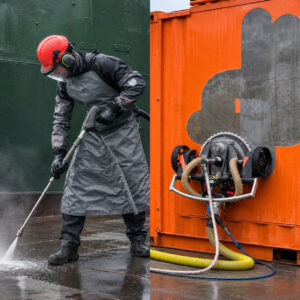
Robotic equipment can suit larger, repetitive areas where controlled nozzle movement and sustained production are priorities. Suitable systems can also increase separation between the operator and the active nozzle. Performance depends on the robot’s design, surface compatibility and the complete equipment configuration.
Some projects benefit from both approaches: robotic equipment handles the main accessible areas, while manual tools complete details and finishing work.
Selection should consider setup time, water supply, wastewater recovery, access and the production required across the whole project. Both methods require trained personnel, appropriate equipment and safety controls.
For a closer look at applications, setup, productivity, nozzle reaction force and recovery requirements, read our guide to choosing between manual and robotic waterjetting methods.
Equipment, Pressure and Safety
What Equipment Is Required?
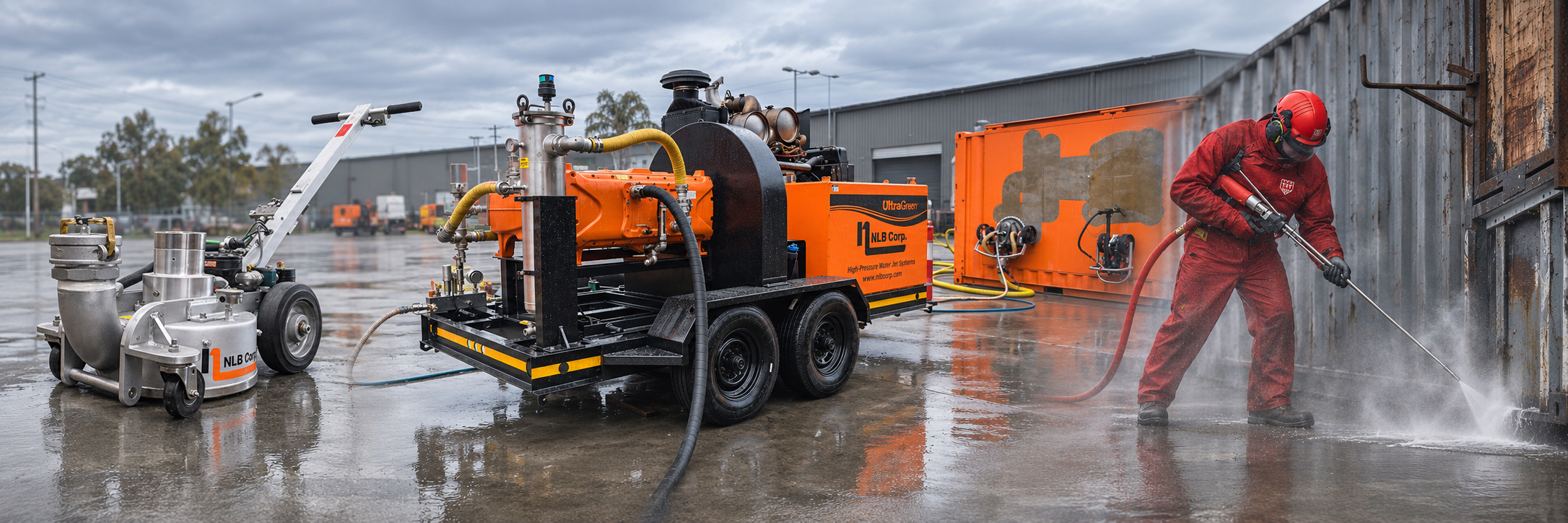
A complete waterjetting or hydrodemolition system involves more than a high-pressure pump. The correct equipment configuration depends on the application, required pressure and water flow, operating conditions and safety requirements.
- High-pressure or UHP pump: Supplies the pressure and water flow required for the application.
- Manual or robotic tooling: Directs and controls how water energy is applied to the work surface.
- High-pressure hoses and connections: Appropriately rated components deliver pressurised water from the pump to the application tool.
- Nozzles and orifices: Control the water stream characteristics to suit the material being removed and the required result.
- Control and pressure-release systems: Provide the means to control, divert or safely release system pressure.
- Water supply and filtration: Deliver the required water volume and quality while helping protect pumps and other components.
- Containment and recovery: Collect and manage wastewater, concrete debris, removed coatings and other contaminants.
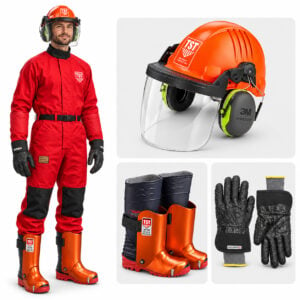
- Waterjetting PPE: Task-specific protective equipment selected for the operating conditions and hazards.
How Much Pressure Is Required?
There is no single correct pressure for every waterjetting or hydrodemolition project. The appropriate pressure and flow depend on the material being removed, the condition of the underlying substrate, the required surface finish and the desired production rate.
Pressure influences the intensity of the water stream, while water flow contributes to the energy delivered and the amount of material that can be removed and flushed from the surface.
Higher pressure does not automatically mean faster or more effective removal. Nozzle configuration, water flow, stand-off distance, travel speed and the characteristics of the material all influence performance.
For hydrodemolition, equipment selection must also consider concrete strength, reinforcement, the required removal depth and the condition of the concrete that must remain.
Questions to Answer Before Selecting Equipment
- What material needs to be removed?
- What is the condition of the underlying substrate?
- What surface condition or removal depth is required?
- What is the total surface area or volume of material to be removed?
- Is the work horizontal, vertical or overhead?
- Is manual or robotic operation more appropriate?
- What access and space are available for equipment?
- What water quality, volume and power are available?
- How will wastewater, debris and contaminants be contained and managed?
Waterjetting Safety and PPE
High-pressure and ultra-high-pressure waterjetting can cause severe injuries, including water injection injuries that may not initially appear serious.
Equipment must only be operated by trained and authorised personnel following manufacturer instructions, site-specific risk assessments, safe work procedures and applicable Australian requirements.
Essential safety considerations include:
- Task-specific operator training and competency
- Appropriate waterjetting protective clothing
- Suitable gloves, boots, face and eye protection
- Correctly rated hoses, fittings and restraints
- Functional emergency stops and pressure-release controls
- Clearly established exclusion zones
- Pre-use equipment inspection and maintenance
- Safe management of wastewater, debris and hazardous contaminants
- Emergency procedures for high-pressure water injection injuries
Important
This page provides general information only. It does not replace formal operator training, manufacturer instructions, site-specific risk assessments, safe work method statements or applicable safety requirements.
For more detailed guidance, refer to our UHP Waterjetting PPE and Safety Guide.
Planning and Choosing a Solution
Is Waterjetting Right for Your Project?
Waterjetting is not automatically the best solutions for every project. The appropriate method depends on the material being removed, the required surface condition, access restrictions, production requirements and environmental controls.
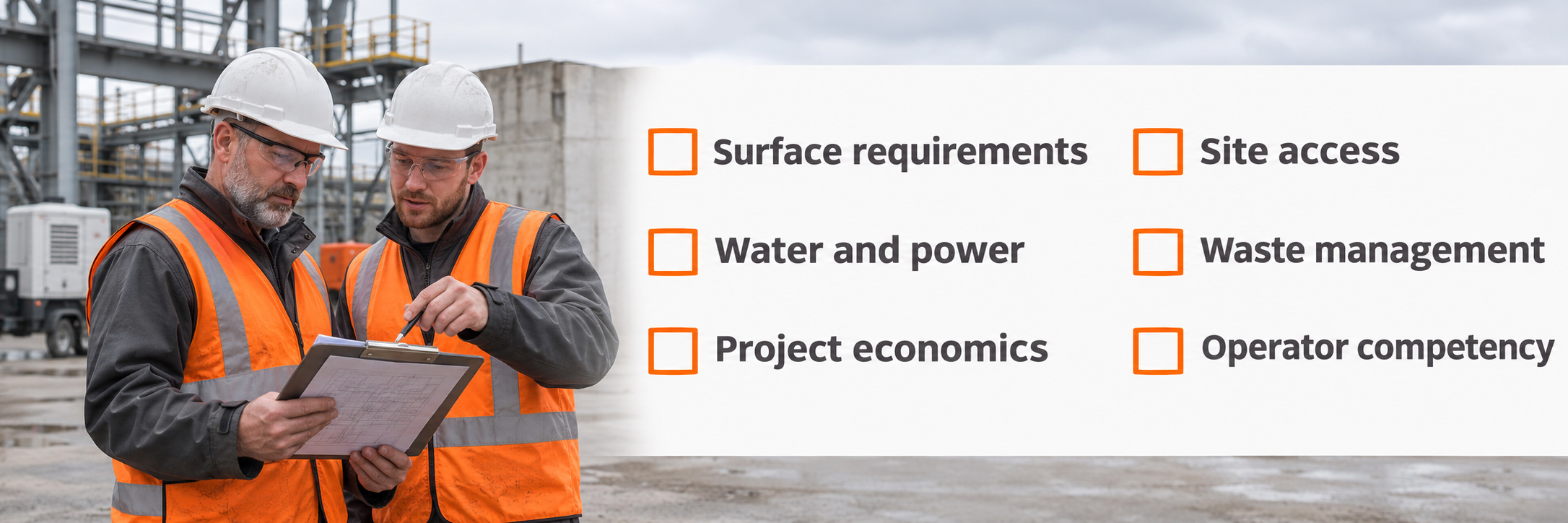
Before selecting either method, consider:
- Surface requirements: Will waterjetting achieve the cleanliness, surface profile specified?
- Site access: Can the equipment, hoses and support systems be positioned and operated safely?
- Water and power: Are adequate water volume, quality and power available?
- Waste management: Can wastewater, debris and contaminants be contained, collected and disposed of appropriately?
- Project economics: Do mobilisation, equipment setup and production requirements make the method practical?
- Operator competency: Are suitably trained personnel and appropriate safety systems available?
For steel surface preparation, waterjetting does not generally create a new abrasive-blasted surface profile. Existing surface condition, flash rust and coating specifications must be considered.
A trial area is often the most practical way to confirm removal performance and the resulting surface condition before full production begins.
QUICK REFERENCE GUIDE FOR CHOOSING THE BEST METHOD
YOUR PROJECT INVOLVES
TECHNOLOGY TO INVESTIGATE
Removing industrial coatings from steel
UHP waterjetting
Removing deteriorated concrete around reinforcement
Hydrodemolition
Cleaning large, repetitive surface areas
Robotic waterjetting
Detailed work around complex structures
Manual waterjetting
Preparing steel for recoating
Waterjetting, subject to coating specifications
How to Plan a Waterjetting or Hydrodemolition Project
Successful projects begin with understanding what needs to be removed, what must remain and how the work can be completed safely and efficiently.
Define
→
Protect
→
Assess
→
Select
→
Trial
STEP
MEANING
01 Define Removal
Identify what needs to be removed, including concrete, coatings, corrosion, scale or contamination. Establish the required removal depth or surface condition.
02 Protect Substrate
Determine what must remain undamaged, such as structural steel, reinforcing steel or sound concrete.
03 Assess Access
Evaluate the work area's size, orientation, accessibility, available services and environmental restrictions.
04 Select System
Choose the appropriate pump, pressure, water flow, manual or robotic tooling, containment and safety controls.
05 Trial Area
Test the proposed system on a representative area to assess removal performance, surface condition and production rate before full-scale work.
Should You Hire or Purchase Waterjetting Equipment?
Hiring or purchasing depends on how frequently the equipment will be used, the type of projects undertaken and the resources available to operate and maintain the system.
When Hiring Makes Sense
Hiring is often the practical choice for contractors undertaking a defined project, testing a new application or requiring specialised equipment that will not be used regularly.
It can provide access to high-pressure pumps, robotic tooling and supporting equipment without the initial investment of purchasing a complete system.
Hiring may be best when:
- Equipment is required for a short-term or one-off project.
- The application requires specialised equipment.
- Project requirements vary significantly.
- Equipment utilisation does not justify ownership.
- A contractor wants to evaluate a system before purchasing.
When Purchasing Makes Sense
Purchasing may be more suitable for contractors who regularly undertake waterjetting or hydrodemolition work and have the personnel, maintenance capabilities and project pipeline to support equipment ownership.
Purchasing may be best when:
- Waterjetting is part of ongoing operations.
- Equipment will be used frequently.
- Consistent equipment availability is important.
- Trained operators and maintenance resources are available.
- Long-term utilisation supports the investment.
Consider the Complete System
The decision should account for more than the pump itself. Tooling, hoses, nozzles, controls, PPE, water supply, filtration, containment, maintenance, operator training and technical support all contribute to the total cost of operation.
BlastOne can help contractors evaluate equipment configurations and determine whether hiring or purchasing is the more practical solution for their application.
Waterjetting Surface Prep Case Studies
From industrial storage tanks to marine vessels, ultra-high-pressure (UHP) waterjetting is used to remove protective coatings and corrosion from steel surfaces. These projects demonstrate how robotic waterjetting can improve coating removal productivity, reduce abrasive consumption and address challenging access or containment requirements.
See how high-pressure and ultra-high-pressure waterjetting have been applied to real industrial projects, from steel coating removal and infrastructure cleaning to concrete rehabilitation.
Steel Storage Tank — 80% Reduction in Abrasive Consumption
A contractor evaluating the removal of epoxy coatings from steel fuel storage tanks trialled the VertiDrive M4 robotic system as an alternative to conventional manual abrasive blasting.
The UHP waterjetting trial achieved an average coating removal rate of 41 m² per hour, accounting for crawler repositioning. By combining UHP coating removal with abrasive blasting where a new surface profile was required, the proposed approach demonstrated an 80% reduction in abrasive consumption and a 20% increase in productivity.
Yarra Valley Water — Robotic Coating Removal on a 26.5-Million-Litre Tank
Yarra Valley Water undertook a major refurbishment of a 26.5-million-litre water storage tank in Doncaster East, Victoria. Because the tank was located near residential areas, reducing noise and airborne dust was an important consideration.
A VertiDrive robotic system used high-pressure waterjetting to remove the existing protective coating while recovering paint debris and wastewater through vacuum extraction.
The process exposed the previously established steel surface profile, avoiding the need for additional grit blasting where the existing profile remained suitable.
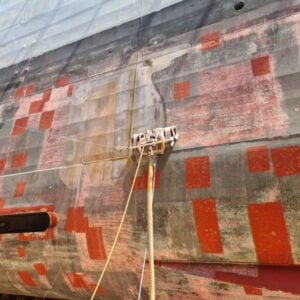
Marine Surface Preparation — VertiDrive M4 Nearly Triples Productivity
An Australian naval hull surface preparation project demonstrated the productivity potential of robotic UHP waterjetting.
Using a VertiDrive M4 system, the contractor achieved nearly three times the productivity of the previous approach. The project illustrates how robotic equipment can improve the efficiency of coating removal on large marine steel surfaces.
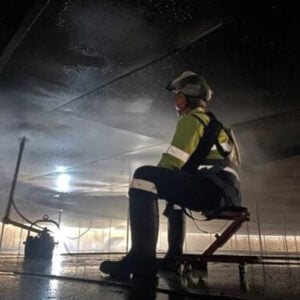
Rotterdam Oil Storage Tank — 300–400 m² per Eight-Hour Shift
At the Maatschap Europoort Terminal in Rotterdam, contractor Persy Steel Protection used a VertiDrive M4 robotic waterjetting system to remove a three-layer epoxy coating from a crude oil storage tank’s floating roof.
The system combined UHP waterjetting with vacuum recovery to capture wastewater and coating debris.
The project was completed within its scheduled four-week timeframe, achieving an average production rate of 300–400 m² per eight-hour shift.
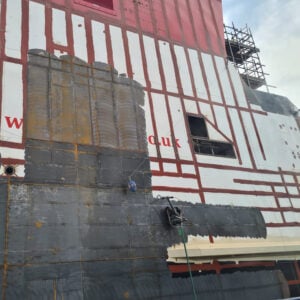
Glen Sannox Ferry — 125 m² per Day Using Robotic UHP Waterjetting
BME Services used a VertiDrive M7 robotic system to remove a four-layer epoxy coating system from the topside of the Glen Sannox ferry.
The existing coating was approximately 1,000 microns thick. Robotic UHP waterjetting reduced the need for operators to work at height while providing a consistent method of removing the protective coating.
The project was completed in eight days, achieving an average coating removal rate of 125 m² per day, compared with an estimated 25 m² per day using traditional manual blasting.
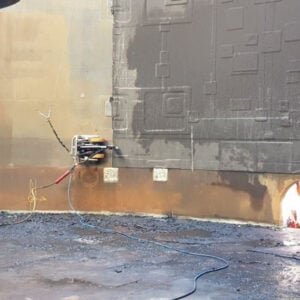
BHP Olympic Dam — Improved Productivity and Safety During Leach Tank Coating Removal
At BHP’s Olympic Dam operation in Australia, robotic UHP waterjetting was selected to remove thick rubber lining from the internal walls of a large tailings leach tank.
The project involved removing approximately 12.7–25.4 mm of rubber coating from a tank measuring approximately 30.5 metres in diameter.
Using VertiDrive M7 robotic equipment, the project achieved a reported removal rate of 150 ft² per hour, compared with the previous 100 ft² per hour achieved by two blasters working from man lifts.
The robotic approach also reduced the need for personnel to work from elevated platforms inside the confined tank.
What These UHP Surface Preparation Projects Demonstrate
These six projects illustrate the versatility of UHP waterjetting for industrial coating removal, from conventional epoxy coatings to thick protective linings.
They also demonstrate why equipment selection should consider more than operating pressure alone. Coating type, adhesion, surface geometry, access, wastewater containment and the required condition of the underlying steel all influence the achievable result.
Actual production rates vary between projects. A representative trial remains one of the most reliable ways to evaluate coating removal performance and establish realistic productivity expectations.
Frequently Asked Questions
Does UHP Waterjetting Remove All Types of Industrial Coatings?
UHP waterjetting can remove many industrial coating systems, but effectiveness varies with coating chemistry, thickness, adhesion and condition. Some strongly adhered or specialised coatings may require different operating parameters or an alternative removal method. A trial area can help establish whether waterjetting will achieve the required result.
Does Waterjetting Create a New Surface Profile?
UHP waterjetting generally does not create a new anchor profile on steel. It removes coatings and corrosion to expose the existing profile. If the remaining profile does not meet the replacement coating specification, additional preparation may be required.
What Is Flash Rust After Waterjetting?
Flash rust is oxidation that can develop on freshly waterjet-cleaned steel as the surface dries. Its extent depends on environmental conditions, surface contamination and drying time. The acceptable level of flash rust must be determined by the project specification and the requirements of the coating system.
Can Steel Be Recoated Immediately After UHP Waterjetting?
Steel should only be recoated when the surface meets the specified cleanliness, contamination, profile, moisture and environmental requirements. Depending on the coating system, drying and inspection may be necessary before application. The coating manufacturer’s instructions and project specification should determine when recoating can begin.
How Does UHP Waterjetting Compare with Abrasive Blasting for Coating Removal?
UHP waterjetting removes coatings and corrosion using pressurised water, generally without creating a new anchor profile. Abrasive blasting removes material using abrasive particles and can establish a specified surface profile. Waterjetting requires wastewater management, while abrasive blasting generates spent abrasive and associated debris. The preferred method depends on the required surface condition and project constraints.
Is hydrodemolition the same as waterjetting?
Hydrodemolition is a specialised application of high-pressure waterjetting used for controlled concrete removal. While waterjetting covers a broad range of cleaning and surface preparation tasks, hydrodemolition specifically focuses on concrete removal and rehabilitation.
When should I use manual rather than robotic waterjetting?
Manual equipment is generally best for smaller areas, detailed work and restricted-access locations. Robotic systems are often better suited to larger, repetitive projects where consistent nozzle movement and increased operator separation are important. LEARN MORE HERE
Can waterjetting equipment be hired?
Yes. Depending on availability and project requirements, contractors may be able to hire high-pressure pumps, application tools, robotic equipment and supporting components. BlastOne can help identify suitable equipment options for the application.
Should I hire or purchase waterjetting equipment?
Hiring may be more practical for short-term projects, specialised applications or occasional use. Purchasing may offer better long-term value when equipment is used regularly and the business has trained operators and maintenance resources.
Does waterjetting eliminate the need for wastewater management?
No. Although non-abrasive waterjetting can reduce spent abrasive waste, wastewater, removed coatings, concrete debris and contaminants still require appropriate containment, collection and disposal.
YOU MAY BE INTERESTED

Talk to BlastOne About Your UHP Surface Preparation Project
Planning an industrial coating removal or surface preparation project? BlastOne can help you evaluate whether UHP waterjetting is appropriate for your substrate, existing coating system, required surface condition and site constraints.
From manual waterjetting equipment to robotic coating removal systems, our specialists can help you assess equipment options, production requirements, access limitations and containment considerations.
Contact BlastOne to discuss your project and identify a practical surface preparation solution.
Contact BlastOne
We love to talk to customers and help them make the best decisions when purchasing Air preparation and drying equipment.
You can reach us via our Live Chat, Email, Phone, and Online Form.